


If you've been on the internet at all in the last month, you've probably come across game theory explanations of the US-Iran conflict. Analysts are throwing around terms like escalation dominance, Nash equilibrium, the Chicken game.
These are the exact concepts we discussed in a recent workshop I did with teenagers in schools.
So what really is Game Theory?
It is a situation where your outcome depends on someone else’s choice. So how do you decide what to do in a way that gives you the best result regardless of what they do?
That’s business. Politics. Friendship. That’s living in a society.
Defect or Cooperate - An Example
Imagine two cars driving straight at each other. The rule of the game: whoever swerves first loses. What should your strategy be?
There are two strategies in this game - defect (keep going straight) or cooperate (sway early).
The possible scenarios:
Cooperate-Defect - P1 sways, P2 stays straight (P1 loses reputation, P2 wins)
Cooperate-Cooperate - Both swerve (decent outcome - both come out with reputation somewhat intact)
Defect-Defect - Both stay straight (worst outcome - both crash)
An extreme move would be to rip out your steering wheel, show it to the other driver, and throw it out of the window. Now you can’t swerve. The other person has to, unless they want to die.
You’ve locked yourself into defection. You’ve removed your ability to swerve, and in doing so, forced the other person’s hand into cooperation.
In a one-off game, it works. You win. But we don’t live in a one-off world.
An Iterative Society
Now imagine you have to play this game again tomorrow. And the day after. What stops the other driver from also ripping out their steering wheel? Now both of you are locked into defection. Both of you crash and both of you lose. And you lose far worse than if one of you had just swerved.
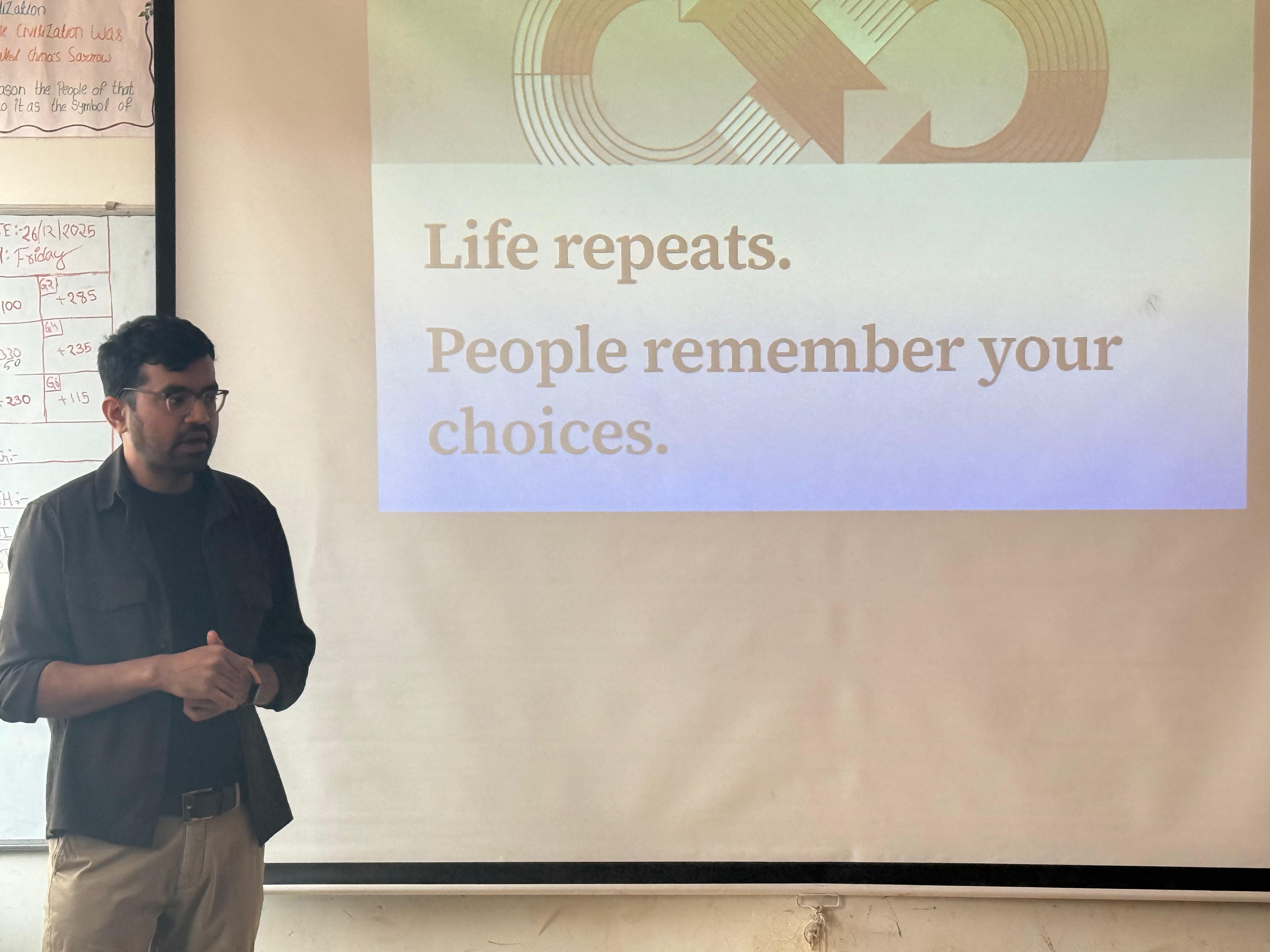
This is the key insight of Game Theory: in a single isolated game, defection can be optimal. But we don't live in isolated scenarios. We live in an iterated society. The same situations play out over and over again. And when you account for that repetition, cooperation for both sides is the better choice. Not just for the group but for each individual too.
Back to Nuclear War
The game that we played is called the Chicken game. And that’s exactly what explains why we haven’t had a full-blown nuclear war.
The defect move in nuclear game theory is to bomb the other nation. The cooperate move is to not bomb. If one country defects and drops a nuclear weapon, sure, the other country is at a disadvantage initially. But a single nuclear bomb doesn’t end a country. And after that, nothing stops retaliation.
Because this is an iterated scenario, the game doesn’t end with one move, both sides know that defection leads to mutual destruction. Cooperate–cooperate is the only outcome where both sides survive. This is nuclear deterrence in a nutshell. This is why it’s held for over 80 years.
There’s one assumption baked into this, though: that all parties are rational, thinking agents. That they weigh outcomes, pick the one that serves their long-term interest, and aren’t swayed by ego. I don’t know if that still holds up today. So… yeah. That’s where we are.
Why This Matters for Kids
These are the kinds of concepts we discuss in our game theory workshops at The Little Rationals.
War is just one example. We use other examples to drive home the point.
We talk about traffic signals. You don’t stop at a red light because a cop is watching. You stop because traffic is an iterated game. If everyone cooperates (stays in lane), follows signals, the system works. Else, there is mutually assured chaos.
Space exploration and sharing findings with each other, cleaning up after yourself in public bathrooms, group projects - we discussed all of these as well.
We also question ‘Sharing is Caring.’ Can we prove it is so by math? In game theory terms, sharing is cooperation. If you cooperate now and share your resources, the other person has an incentive to cooperate with you later. The common pool grows. If everyone defects, i.e. acts greedy, the pool shrinks. And we all lose.
I’ve spent almost a decade using game theory as my daily bread and butter.
As a professional poker player, I used GTO or Game Theory Optimal as my primary strategy. I used it to guide my play in a game where I don’t know what my opponent is going to do. And it helped me answer the same question we now ask kids in a classroom:
Given that you can’t control what the other person does, what’s the smartest thing you can do?
I feel very strongly about Game Theory as a concept to teach young kids how to live responsibly in a shared society. That is what’s missing in our education system today. And that’s what I want to solve with The Little Rationals.