


I recently attended a program on becoming a leader for transformation. I ended up really enjoying the person I was being.
I’m a fairly self-critical person with occasional bouts of imposter syndrome. But at the program, I felt free from that baggage. I was happy with the version of Mayank who showed up. That, to me, is a great indicator of an empowering program.
This happened as The Little Rationals was inducted into The Circle India—an 18-month incubation program for social entrepreneurs working in education. Every month or so, the cohort comes together somewhere in the country for a few days of work. This is my account of Module 1.
Taking Care Of The Instrument
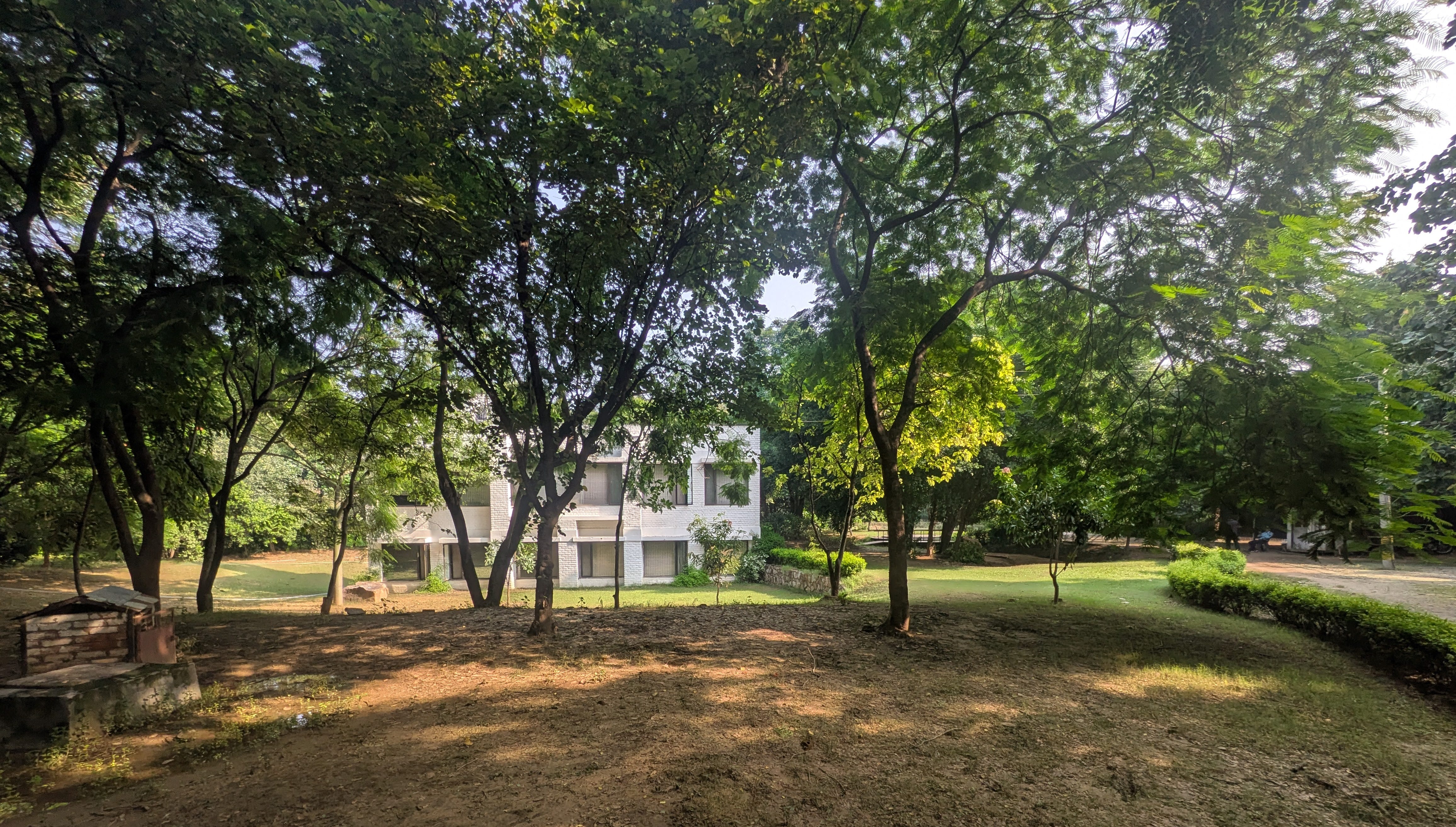
The induction happened at the Gnostic Centre in Gurgaon. It’s green, quiet, earthy and conducive to thinking about large questions. The food was simple vegetarian food, cooked by a guy who had worked there for 34 years.
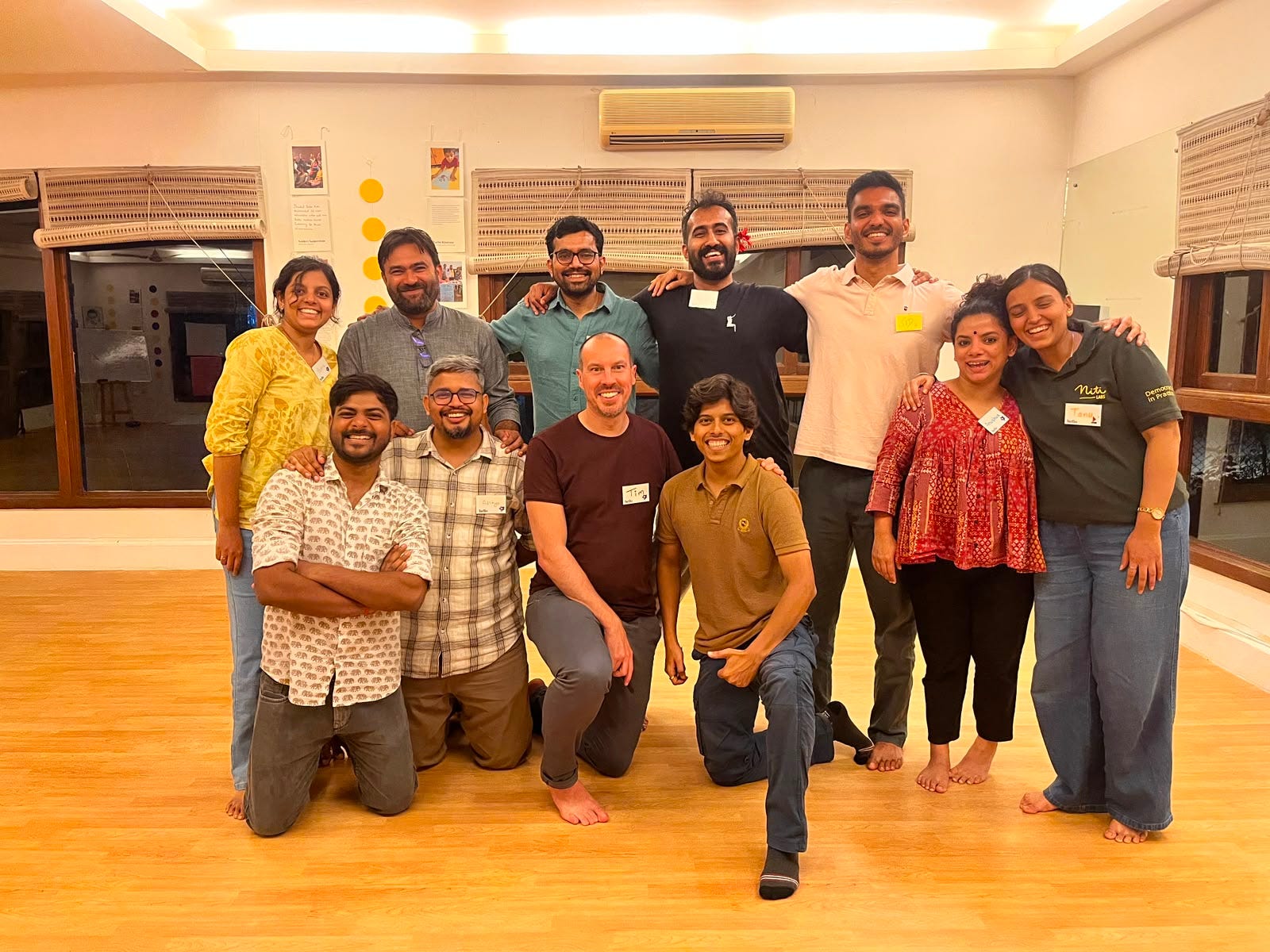
Every morning began with a mind-body session. Around 45 minutes of physical activity followed by some form of mindfulness. We played frisbee. Childhood games. Did Tai Chi. Kalarippayattu. Pranayama. Mindfulness walks. At one point someone had us making sounds in gibberish. Different cohort members facilitated different sessions which is a testament to how absurdly talented these people are.
The point of these sessions was to drive home that you are the instrument through which all this work will happen. Take care of the instrument. Sleep. Exercise. Eat properly.
I slept incredibly well there. At home, I often put on a podcast when I’m going to sleep. There, I didn’t need anything. At 10 or 10:30, I was done. No residual attention left that needed to be drained through another podcast, video or scroll. So, I just slept.
Leadership For Transformation
The centerpiece of the induction was four days with Tim Davis, a UK-based leadership coach who works with impact organizations around the world.
I hesitate to call what he did a workshop. Instead, think of it as a gym. Nobody builds muscle because the trainer gave an excellent lecture on squats. You build it by doing repetitions. His four days were essentially that - a gym for leadership.
The program was called Leadership for Transformation.
Emphasis on the word transformation because change can be small but transformation implies that the thing on the other side looks fundamentally different from the thing you started with.
That’s what I’m trying to do, in my own tiny way, through TLR. And Tim’s question was basically:
Who do you need to be if you’re serious about causing that transformation? Not who you would like to be. Who do you need to be?
Your word should become the truth.
At the beginning, we were given a written set of agreements that we all agreed to. Things like being present, being on time, taking care of yourself and the group.
One day, after a break, one person came back about a minute late. Tim scrapped whatever he had planned and instead spent almost an hour talking about the broken agreement.
The next day, someone arrived perhaps 20 or 30 seconds after the agreed moment. The clock may even have still shown the same minute. Same thing. Back to the agreement.
This was tedious, for sure, but also necessary. It was sort of an exercise in doing what’s necessary even if it’s boring or difficult.
Tim used the analogy of a bicycle wheel. One broken spoke doesn’t destroy the wheel. Leave it unrepaired, though, and the pressure moves to the others. Another spoke breaks. Then another. Eventually the whole thing gives way.
If you’re going to lead something difficult, your word has to mean something. If you say you are going to be on time, you have to be there. If you say something is going to happen, your job is to cause that reality.
On another occasion, Tim had assigned me the task of making sure that the whole group of eight people showed up at the agreed upon time for the session. I said, “That seems difficult.” He looked at me and asked: “Is it more difficult than what you’re trying to do with The Little Rationals?” Well, I’m trying to make India a great place to live for everyone. So, I guess, no.
“I am” versus “I am being”
I have a belief about myself: I am conflict-averse.
Tim asked whether that was a belief or a story you’ve built for yourself and reinforced over the years?
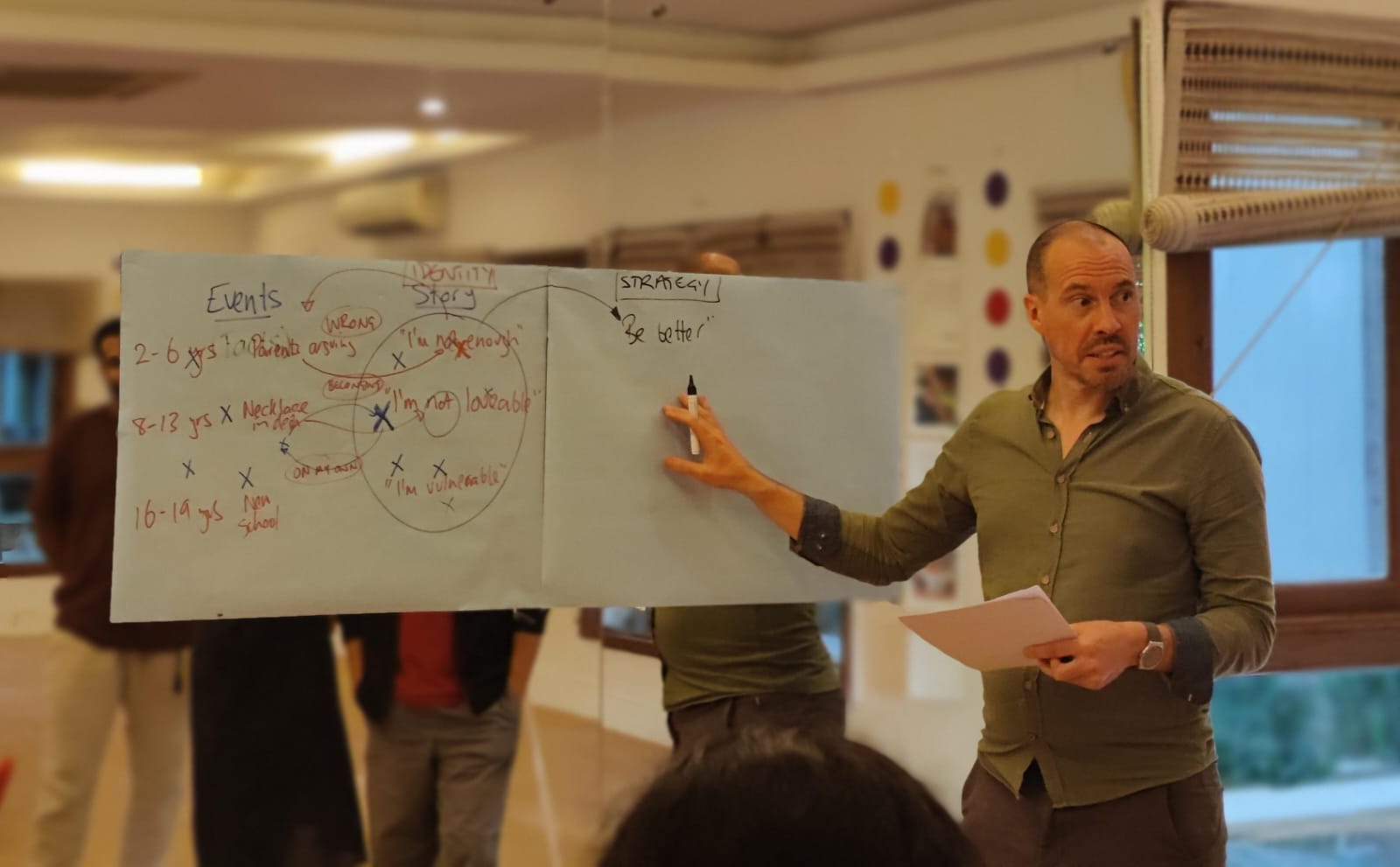
What happens every time I say I am a conflict-averse person? I’ve converted a behavior into an identity. Something happens, I avoid confrontation, then I point to it as more evidence. See? That’s who I am. The story strengthens itself.
Tim suggested a small linguistic change. Instead of: I am conflict-averse, try: I am being conflict-averse. One sounds like my OS, the other sounds like something I’m doing right now. And things you’re doing right now can change.
He used another analogy I loved. Imagine you’re a piano. You may have favorite keys. Some will come naturally. You might almost never play others. But you still have access to the whole piano. For example, assertiveness may not be one of my favorite keys. Doesn’t matter. If the outcome I care about requires assertiveness, that key is available to me.
Will it be comfortable? No. But I can be uncomfortable and still get the job done at the same time.
That’s both liberating and slightly terrifying. Because once you accept that, a lot of your favorite excuses disappear.
Process versus outcome
Poker has drilled process over outcome very deeply into me. In a game where you might lose almost one third of your sessions, it’s hard not to. But Tim gave me an additional lens.
You are up to something; there is some outcome in the world that you are committed to producing. So think clearly about that outcome. Then do whatever is required to get there.
I had a frankly stupid moment where I really internalized it. I’d had a slightly upsetting logistical interaction with someone at The Circle. The next morning, I was in the shower replaying the conversation in my head. You know the one where you invent the excellent comeback twelve hours too late.
Then suddenly I realized: I have no idea what I’ve been doing for the last one minute. Did I wash my face? Have I just been standing here? I had an agreement to be on time for Tim’s session. And I didn’t want to break that. The desired outcome: finish getting ready and reach the room on time. So I stopped arguing with an imaginary person and took a shower properly.
I’ve started noticing this even while driving. Someone cuts me off badly. Yes, I’m annoyed. But what outcome do I want? I’m driving my son to school. Get him there safely. Road rage is very poorly aligned with that outcome. Feeling annoyed is fine. Following that feeling wherever it wants to go isn’t compulsory.
Make it real
One recurring Tim-ism was: Make it real.
Tim and I started role-playing a fundraising conversation. First, he played Mayank. I played the funder. He was annoyingly good at being me and we struck a deal fairly easily.
Then we switched. I pitched. He resisted. I responded. He resisted again. And then, I stopped and took a deep breath.
Instead of searching for some clever fundraising technique, I connected to why I actually want TLR to exist. I spoke about the country I want my son to grow up in. I could feel my eyes filling up. That changed the conversation.
Eventually fake-funder Tim said yes. We shook hands, everyone clapped. Great. Role-play complete. Except Tim doesn’t like leaving things as role-play. There was an actual person I had been meaning to ask for funding. He happened to be in Gurgaon.
“Message him.”
I explained that our schedule was packed and I probably wouldn’t have time. Excuse. Message him. So I did and we eventually did meet. That meeting resulted in TLR’s first funding commitment!
Make it real.
Integration
At the end of each day, Tim would make us dance. Well, maybe not make, but invite us.
We’d spent hours thinking, reflecting, having difficult conversations, occasionally crying and then we’d get up and move. The idea was to integrate what we had learned into our bodies, rather than leaving it all in our heads.
The Circle Pedagogy
After Tim’s program began the main Circle induction work. That happened in a room that could be mistaken for Bilbo Baggins’ lounge. Circular, no tables, wooden floor with cushions and floor chairs.
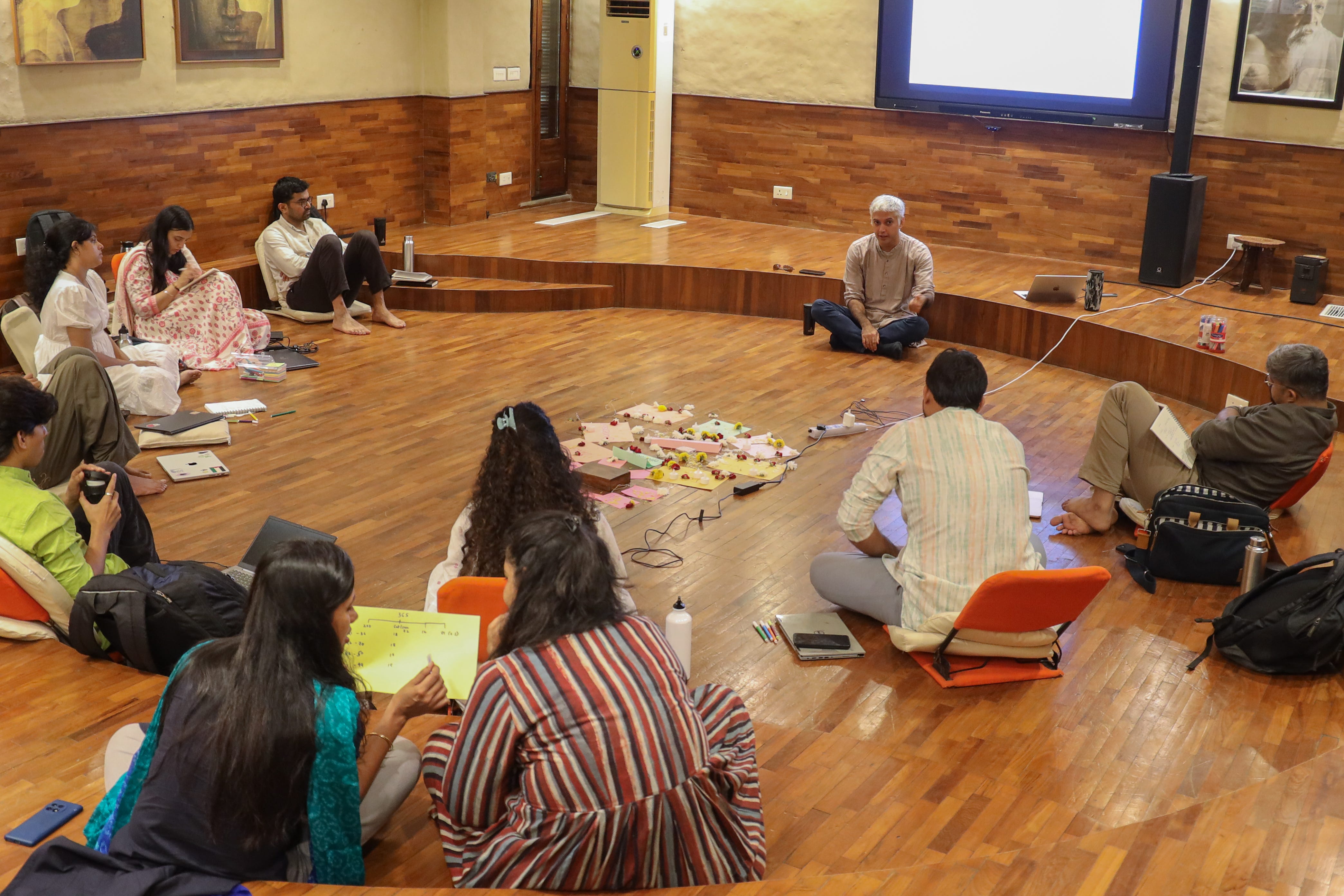
One of the early activities had the Preamble of the Constitution projected on the screen. Words from it were given to us: liberty, justice, equality and so on. Think about what the word means to you. Discuss it with another person. Then bring the thought back to the group. Someone adds another perspective. Your original thought changes slightly. Then you think again.
This pattern appeared everywhere. Sometimes we were in pairs. Sometimes groups of three. Sometimes four. The groups kept changing. Even where we sat inside the room kept changing. It sounds trivial, but it kept the room alive.
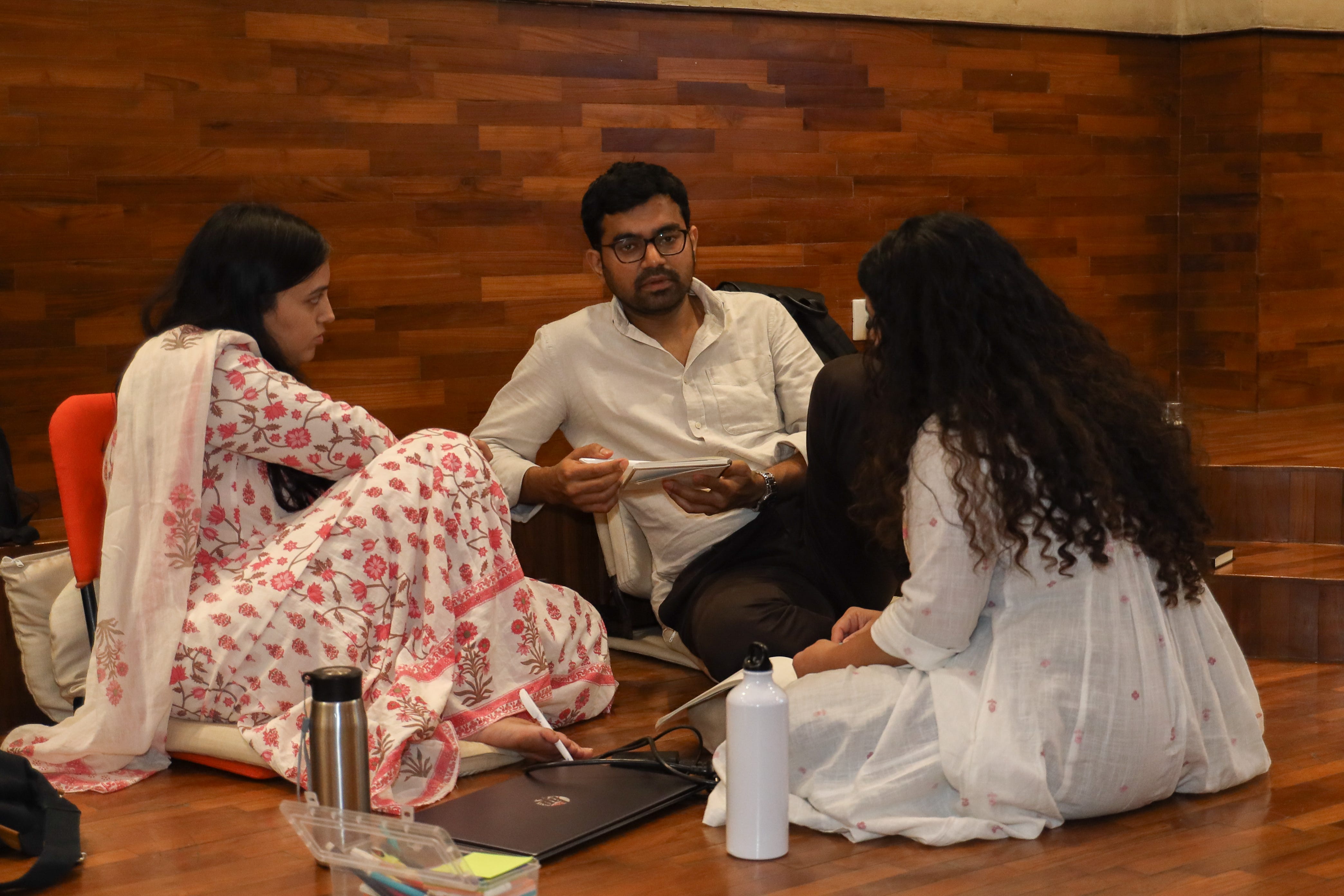
Another activity was where we worked on our vision and graduate outcomes.
What kind of person do I actually hope a TLR student becomes? What does their life look like fifteen years from now? What is different about their community because this person exists?
The facilitator’s job was to ask enough questions that eventually you had to decide what you actually believed. I really enjoyed the reflection-based pedagogy and it’s something I’m taking back to TLR.
A Moral Ambition
When I came back home, my wife had bought the book ‘Moral Ambition’ by Rutger Bregman for me. It lights a fire under your bum, to be honest.
There is a much larger world of people doing interesting, difficult, useful work than most of us ever encounter. At The Circle, I met people tackling BIG problems. And I call them big, because the hurdles these problems face are not just large but extremely complex - social, political, financial, and physically and emotionally challenging.
I don’t know how they are doing it. Because, to be honest, I am scared every day of what’s going to become of The Little Rationals. “Transform India” is a fairly ridiculous item to put on your to-do list.
But time has taught me that it’s impossible to connect the dots looking forward. Mostly, I’ve had enough confidence/stupidity to walk towards whatever felt right at the time. Engineer. Startup founder. Writer. Poker player. Coach. Somehow it has worked out okay.
It feels amazing to do what I’m doing right now and to be in the company of people I now meet. So I think I’ll be fine.
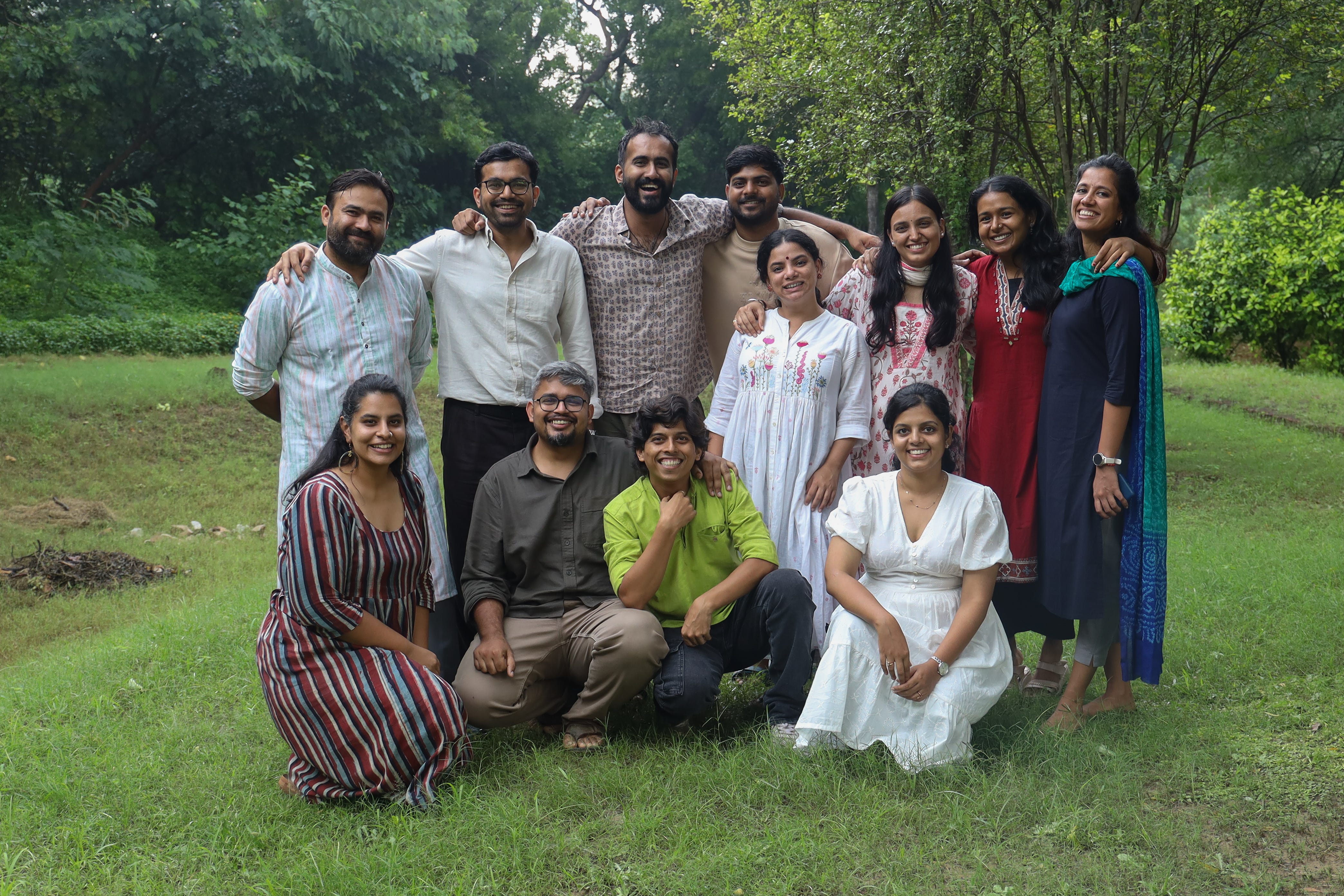
I have no idea whether TLR will become what I envision it to be. But The Circle has shown more confidence in me at times than I have in myself. And they’ve reminded me that I don’t have to figure this one out alone. For the first time in a long time, I feel like I may have found my tribe. And if you’re up to something, that seems like a pretty good place to start.